
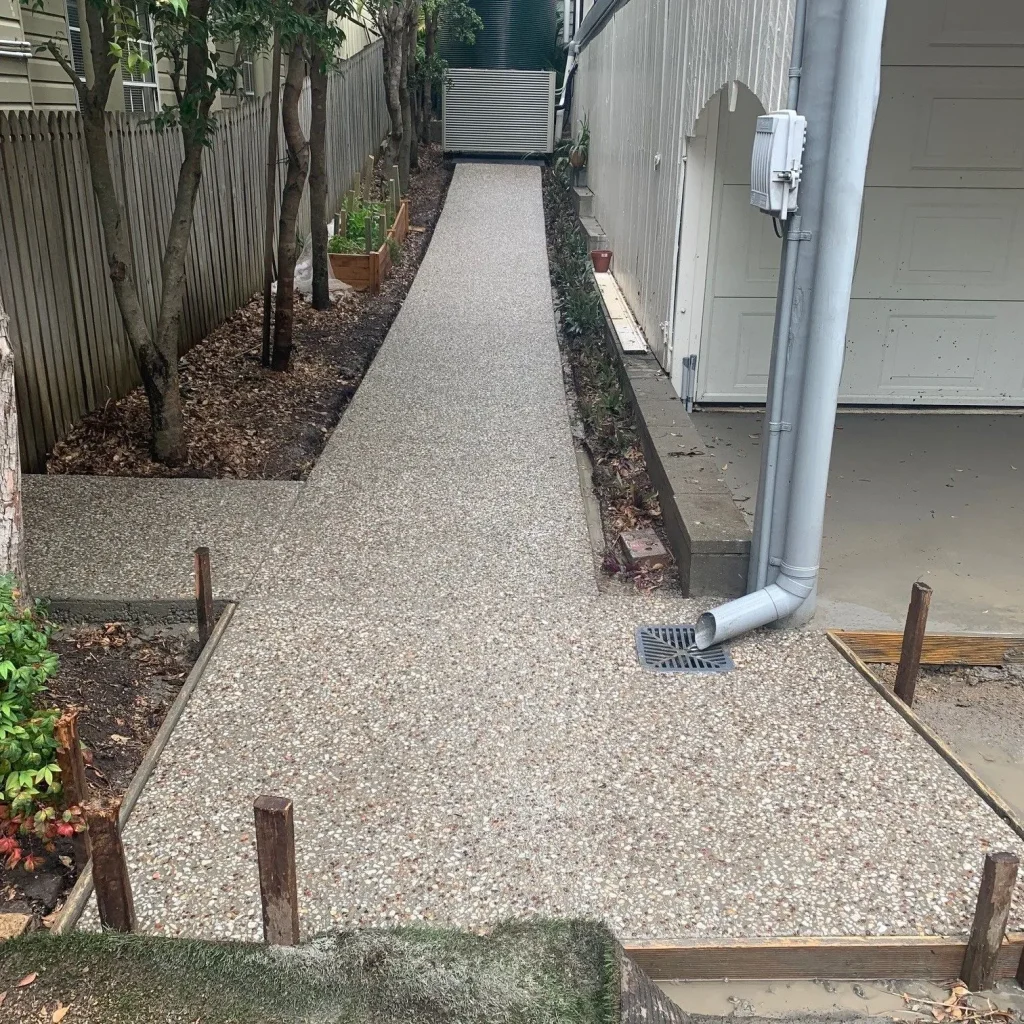
An exposed aggregate driveway is a low-maintenance surface, but low maintenance is not the same as no maintenance. A bit of care, at the right times, keeps the stone looking rich and the surface shrugging off oil, sun and the heavy summer rain we get up here. The Queensland climate is hard on outdoor concrete, so here is how we tell our customers to look after an exposed aggregate finish once it is down.
Why sealing matters in the Queensland climate
The two things that age an exposed aggregate surface fastest are the sun and the wet. Our long, harsh UV fades the colour of the stone and the cement over time. The heavy downpours and humidity push moisture into the surface, and where there is moisture there is the chance of staining, mould in the shade, and oil soaking in rather than sitting on top.
A sealer is the barrier against all of that. It locks the colour in so the finish keeps its depth, and it stops spills and grime working their way into the surface. On a North Brisbane block that bakes in summer and floods in a storm, the seal is what keeps the driveway looking like the day it was poured.
The everyday cleaning routine
Day to day, there is very little to do. A regular sweep keeps leaves and grit off the surface, and a hose down handles the rest. The textured stone hides marks far better than plain concrete, so you will not be chasing tyre scuffs and footprints the way you would on a flat grey slab.
For a deeper clean once or twice a year, warm water with a mild detergent and a stiff broom lifts the built-up grime. If you use a pressure washer, keep it on a wide fan and hold it back from the surface. Too much pressure, too close, can chip the stone or strip the sealer, so go gently.
Dealing with oil and stains
Oil is the one stain worth jumping on quickly. A car that drips, a mower refuelled on the driveway, a tin of paint knocked over. The sooner you deal with it, the better. While the surface is sealed, most spills sit on top long enough to be cleaned up. Soak up what you can, then wash the area with warm soapy water.
The harder oil is to shift, the more it is telling you the seal is wearing thin and letting things soak in. That is your sign it is time to reseal.
How often to reseal
As a rule, an exposed aggregate driveway in our climate wants resealing every few years. A driveway in full sun, or one that cops a lot of traffic, will be on the shorter end of that. One in shade with light use will stretch longer. There is no fixed calendar date, because every block is different.
The driveway will tell you when it is due. If the colour starts to look flat and dull, if water soaks straight in rather than beading on top, or if marks are starting to stick, the seal has worn back and it is time for a fresh coat. Resealing is a straightforward job, and it is far cheaper than letting a surface degrade and trying to bring it back later.
A few things to avoid
Keep harsh acids and strong chemical cleaners off the surface, as they can eat into the cement and dull the stone. Go easy with the pressure washer, as above. And try not to drag heavy metal objects across the finish, since the stone is hard-wearing but a sharp edge under enough weight can still mark it.
Beyond that, an exposed aggregate driveway asks very little of you. Sweep it, hose it, wipe up spills, and reseal it when it asks. Do that and the finish will look good for many years.
We can take care of the sealing for you
We have been laying and looking after exposed aggregate across North Brisbane and the Moreton Bay Region since 1985, and we are QBCC licensed (1096727). If your driveway is looking flat or due for a reseal, or you want to see the stone finishes we offer, have a look at our exposed aggregate concrete page.
Get a free, no-obligation quote and we will sort the sealing, or talk you through caring for a new exposed aggregate driveway.


